


















Every week, parents tell us about the same teenager.
Smart, capable, genuinely trying – and completely unable to focus.
Homework that should take 30 minutes stretches past bedtime. They read the same page three times and still can't tell you what it said. They walk into a room and forget why they're there. By the time they get home from school, they're so drained they can barely hold a conversation.
"He's not a bad kid. He just can't lock in."
"She's trying so hard. It's just not sticking."
We heard it so often that we started digging. Not into screens, motivation, or discipline - into biology. What does a teenage brain actually need to focus? And is it getting it?
What we found had nothing to do with effort. It came down to one nutrient most parents have never heard of, and most teens aren't getting enough of.

The Brain Is Asking for More Than It's Getting
The teenage brain isn't a smaller version of an adult brain. It's a construction site.
And the last part to be finished is the prefrontal cortex - the area responsible for focus, planning, and staying on task. It doesn't fully mature until the mid-20s.
So right when school gets harder, schedules get busier, and phones get louder, teens are relying on a part of the brain that's still being built.
Construction like that doesn't run on willpower. It runs on raw materials. And one of the most important is a nutrient most parents have never heard of: choline.
The brain uses choline to make acetylcholine, a chemical messenger involved in attention, learning, and memory. It also uses choline to build the membranes around brain cells (the outer layer that lets cells send and receive signals).
The body can't make nearly enough on its own, so most of it has to come from food. The richest sources are liver, egg yolks, fish, and beef.
Now think about what your teen actually eats in a day.
Cereal or nothing for breakfast. A packaged snack between classes. Whatever's fastest for lunch. Roughly two-thirds of the calories kids and teens eat now come from ultra-processed foods - and those foods deliver very little choline.
A teenage boy needs roughly 550 mg of choline a day. One egg has about 150 mg. Liver, the richest source, is something most teens won't touch.
So it's no surprise that around 90% of Americans don't get enough choline, and teens, especially teen girls, are among the furthest behind.
Full stomach. Empty tank.
And when the brain's focus system runs short on raw materials, it rarely looks dramatic.
It looks like drifting off mid-sentence, forgotten assignments, and brain fog by the third period.
A Simple Way to Close the Gap
Eating more eggs, fish, and lean meat helps. But let's be real: most teens skip breakfast, won't eat liver, and trade planned meals for whatever's quickest between school, practice, and friends.
So we set out to make something that fills the gap without relying on a perfect diet.
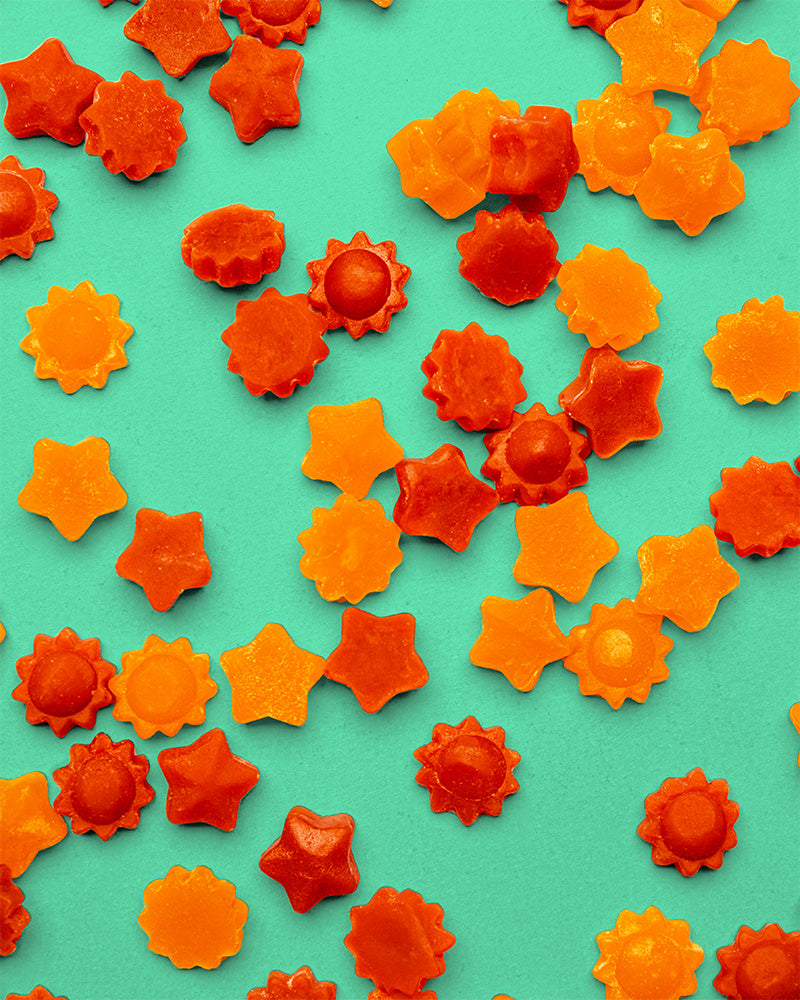
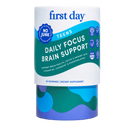
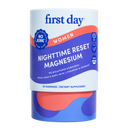
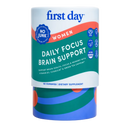
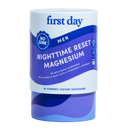
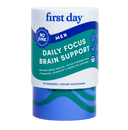
That's how we created Teens' Daily Focus Brain Support - a daily gummy built to give a developing brain the raw materials it uses to focus, learn, and remember.
Each ingredient was chosen for a specific job:
→ Cognizin® Citicoline delivers choline in a form the body absorbs and uses efficiently, giving the brain what it needs to make acetylcholine and maintain healthy brain cells.
→ Phosphatidylserine helps those cells communicate.
→ Vitamin B3 supports the energy that keeps the whole system running through a long day of learning.
And the results parents are seeing speak for themselves:
-
More than 8 in 10 said First Day helped their teen focus and concentrate better
-
85% saw their teen's memory and recall improve
-
82% said it helped reduce their teen's brain fog
-
9 in 10 said their teen felt calmer throughout the day
Most "focus" products try to push a tired brain harder. This one gives it what it's been missing.
And because it's a daily gummy, it fits into the one routine teens actually stick to. No pills to swallow. No meal planning. Just two seconds in the morning.
No jolt. No crash. Just steady, all-day support for a brain doing some of the hardest work of its life.